
Last Updated on 20/07/2026
Spain are the 2026 World Cup champions. Ferran Torres scored the only goal of the final in the 106th minute of extra time, sealing a 1-0 win over Argentina at MetLife Stadium — moments after Enzo Fernández was sent off for a second yellow card, leaving Argentina to play the rest of the match a man down. It’s Spain’s second World Cup title, following their 2010 triumph, and it ends Argentina’s bid to defend the crown they won in Qatar.
Below is the full match report, key stats, both teams’ road to the final, and where to watch the replay on Fox Sports and Telemundo.
World Cup 2026 Final Highlights
Watch highlights of Bronze final: England vs France
World Cup 2026 Final: Key Facts
| Result | Spain 1-0 Argentina (after extra time) |
| Goal | Ferran Torres, 106′ |
| Venue | MetLife Stadium (New York/New Jersey) |
| Key moment | Enzo Fernández (ARG) sent off, 105′ |
| Third-place playoff | England 6-4 France (July 19, Miami) |
Match Report: Torres Breaks Argentina’s Resistance in Extra Time
Neither side could break the deadlock in 90 minutes — Spain dominated possession while Argentina defended resolutely, sending the final to extra time at 0-0.
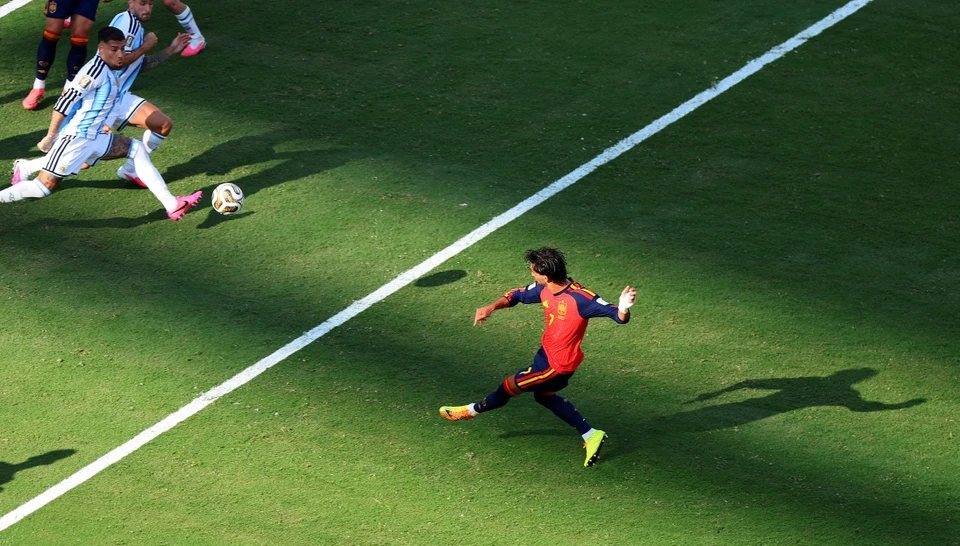
The turning point came in the 105th minute, when Argentina’s Enzo Fernández received a second yellow card and was sent off, leaving his side to play the closing stages a man down. Barely a minute later, in the 106th minute, Ferran Torres raced through on goal, went one-on-one with goalkeeper Emiliano Martínez, and slotted home the winner.
Spain finished the match dominant across the board: 68% possession and 20 shots (11 on target), against just 3 shots from Argentina — none on target. The win gives Spain their second World Cup title, adding to their 2010 triumph and completing a Euro 2024–World Cup 2026 double. Argentina fall short in their bid to defend the title they won in Qatar.
The 2026 World Cup Final Makes History
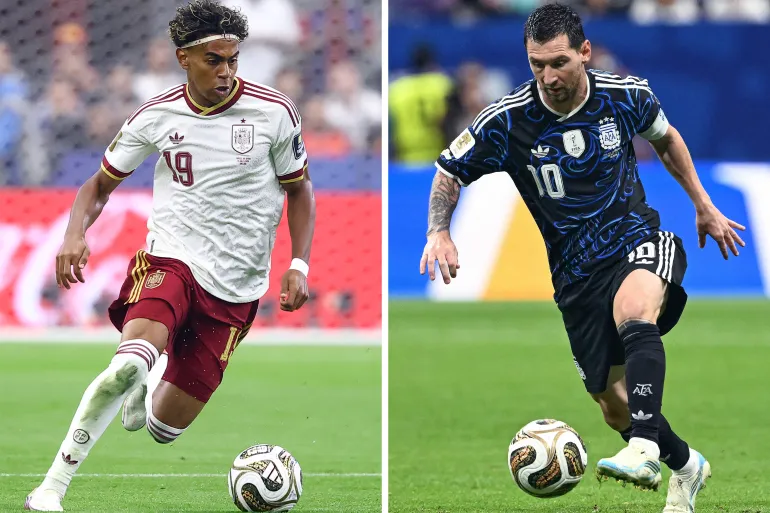
After overcoming France and England respectively in the semifinals, Spain and Argentina—the two best teams in the world—will clash in the battle for the golden trophy. This is not just a face-off between two football nations rich in tradition; it also marks the first time in history that a World Cup final features the reigning Euro champions against the reigning Copa América champions.
Spain enters the match as the kings of Europe, while Argentina holds the South American crown after their Copa América triumph. The two rulers of the world’s most dominant football continents will compete for the ultimate national team title, setting the stage for a blockbuster showdown dubbed the “Clash of Champions.”
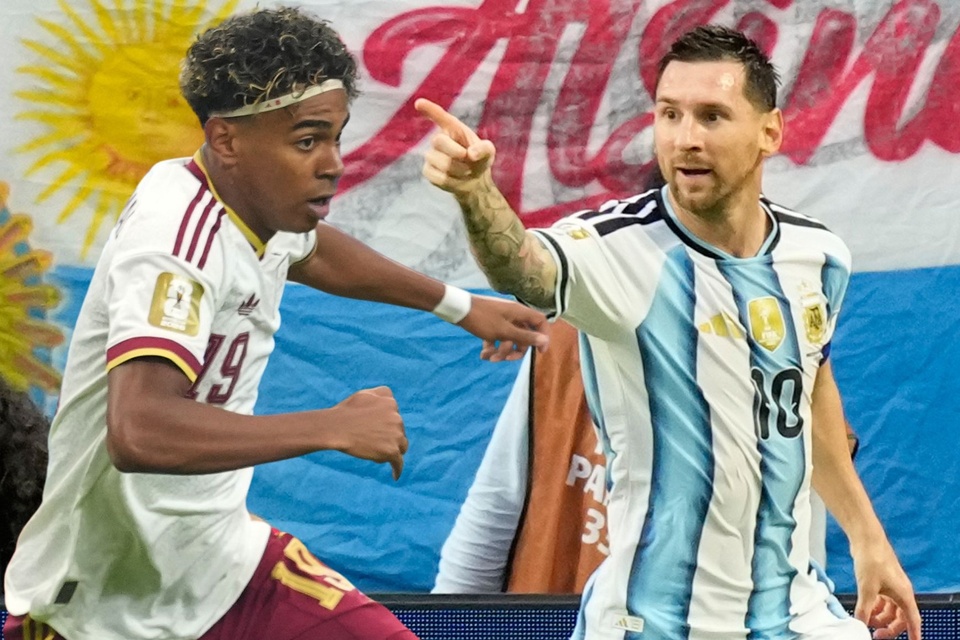
This match is also a highly anticipated duel between two generations of superstars:
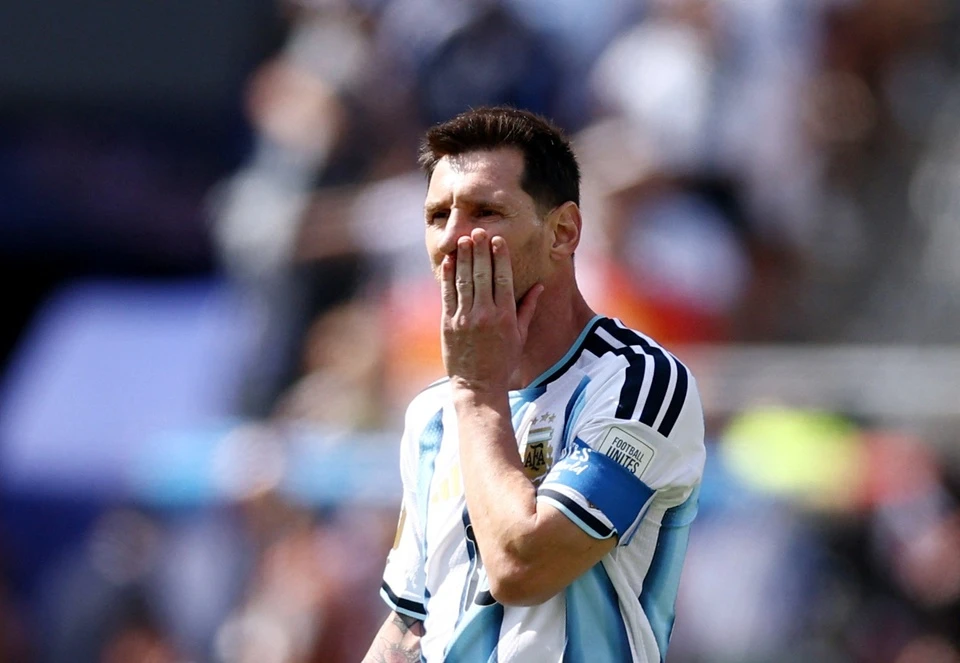
- Argentina continues to place their faith in Lionel Messi. Even at 39 years old, he maintains an impressive form, having recently provided two assists to help his team pull off a 2-1 comeback victory against England.
- On the other side of the pitch, Spain boasts a squad of incredibly talented young players paired with a modern possession-based style of play, promising to pose a major challenge to the defending world champions. “La Roja” booked their ticket to the final after a convincing 2-0 win over France.
Historically, both nations are giants of world football. Argentina is aiming for back-to-back World Cup titles, while Spain harbors the ambition to conquer the world stage once again since their historic 2010 triumph.
The presence of both the European and South American champions in the ultimate showdown sets an unprecedented milestone in World Cup history, promising an absolute peak-level final.
Squad Strength & Current Form Analysis
Spain – Youthful Energy & Modern Possession Play
Spain enters the 2026 World Cup final as an absolute powerhouse, driven by a devastating run of form throughout the tournament. Under the tactical brilliance of head coach Luis de la Fuente, “La Roja” has showcased a highly modern, fluid, yet pragmatic brand of possession-based football.
- A Rock-Solid Defense: Spain’s greatest asset in this tournament has been their defensive resilience. They have conceded just a single goal in seven matches leading up to the final. The partnership of the experienced Aymeric Laporte and the astonishingly composed 19-year-old Pau Cubarsí has formed an impenetrable iron wall in front of their goal.
- A Dynamic Midfield: Rodri remains the undisputed “heartbeat” dictating the team’s tempo. The presence of creative, high-energy midfielders like Fabián Ruiz and Dani Olmo allows Spain to easily suffocate any opposition resistance right from the center of the park.
- Devastating Flanks: The most explosive spark of this team comes from the wings, featuring the prodigy Lamine Yamal and the highly dynamic Nico Williams. Lamine Yamal continues to terrorize opposing defenders with his world-class technical skill and brilliant vision.
- Recent Form: Spain is on a convincing undefeated streak, highlighted by a dominant 2-0 victory over title favorites France in the semifinals to secure their place in the final.
Argentina – Championship Pedigree & Messi’s Last Dance
Argentina arrives in New Jersey on a historic mission: to become the next team to successfully defend their coveted World Cup crown. Lionel Scaloni continues to prove why he is one of the world’s elite tacticians, building a gritty, street-smart, and incredibly resilient squad that knows exactly how to win when it matters most.
- Mental Toughness & Resilience: Argentina in the 2026 World Cup is a team that is incredibly difficult to break. They can “bend but never break.” The clearest proof was their emotional 2-1 comeback victory against a formidable England side in a dramatic semifinal clash.
- The Brilliant Spark of Lionel Messi: At 39, captain Lionel Messi continues to display his unparalleled, world-class caliber. With 8 goals scored in the tournament, the superstar not only leads the Golden Boot race but also tops the assist charts. He remains the ultimate emotional and technical catalyst for the Albiceleste.
- The Perfect Supporting Cast: Flanking Messi is a gritty yet highly technical midfield featuring Rodrigo De Paul, Enzo Fernández, and Alexis Mac Allister. Up front, the attack is brilliantly supported by clinical forwards like Julián Álvarez and Lautaro Martínez, both always ready to punish defensive lapses. In goal, Emiliano “Dibu” Martínez remains an incredibly reliable savior in life-or-death moments.
- Recent Form: Argentina faced a highly challenging knockout path, but their championship pedigree saw them overcome elite opponents to reach the grand finale.
Tactical Analysis: The Keys to Deciding the Final
The final at MetLife Stadium is not just a clash of superstars, but a high-stakes chess match between two brilliant tactical minds: Luis de la Fuente and Lionel Scaloni.
The Midfield Battle: Rodri vs. Argentina’s Grit
Controlling the central channel will be the top priority for both sides. Spain will look to dictate play through Rodri’s elite press-resistance and distribution. However, the Man City midfielder faces a daunting task against Argentina’s “combustion chamber” of Rodrigo De Paul, Enzo Fernández, and Alexis Mac Allister. Argentina is highly likely to cede possession, deploy a relentless mid-block press to sever the connection between Rodri and Spain’s attack, and launch rapid, vertical counter-attacks.
Neutralizing the Catalysts: Who Will Stop Lamine Yamal & Lionel Messi?
Two generations of football’s finest talents will go head-to-head on the pitch.
- For Spain, Argentina’s left-back (likely Nicolás Tagliafico or Valentín Barco) faces the nightmare task of containing an unpredictable and explosive Lamine Yamal. Without proper cover from center-backs like Cristian Romero or Lisandro Martínez, Argentina’s left flank is at constant risk of being torn apart.
- On the other hand, Aymeric Laporte and Pau Cubarsí must solve the puzzle that is Lionel Messi. While he may no longer run the distances he once did, Messi’s positioning, playmaking, and defense-splitting passes remain the most lethal weapons in world football. The experienced Laporte will need to shadow Messi closely, denying him any pocket of space just outside the Spanish penalty area.
Impact Substitutes & Set-Piece Situations
In a tightly contested, high-stakes final, set-piece routines or bench depth often break the deadlock.
- Argentina boasts incredibly dangerous late-game options like Lautaro Martínez or the young talent Nico Paz, both capable of moments of magic.
- Spain is equally prepared to shift to a more direct wing-play approach if needed. Aerial duels from corner kicks—leveraging Spain’s tall center-backs—or trademark direct free-kicks from Messi could be the minor details that ultimately decide who hoists the golden trophy.
Numbers to Watch — and Each Side’s Weak Point
Per Opta data, Spain average 63.86% possession per match, the highest at the tournament, against Argentina’s 60.72%. De la Fuente’s side also lead in ball recoveries, winning the ball back successfully 68.18% of the time — best among all 48 teams — while Argentina attempted the most recoveries (141) but succeeded only 56.74% of the time. Rodri set a new World Cup record for completed passes in a single edition (655), breaking his own mark from 2022. On the other side, Messi is now the all-time leading assist-provider in World Cup history with 12, having already broken Miroslav Klose’s scoring record earlier in the tournament.
Spain’s biggest vulnerability sits at the heart of their midfield: this season, Spain conceded 14 goals in 8 matches without Rodri, and just 1 in 11 matches with him on the pitch — take him out of the game, and Spain’s control can unravel. Argentina, meanwhile, haven’t kept a clean sheet in five straight matches, and goalkeeper Emiliano Martínez has saved just 56.25% of shots faced (38th among goalkeepers at the tournament), well behind Unai Simón’s 90%. Set pieces are Argentina’s trump card — they lead the tournament with 7 goals from dead-ball situations (despite Messi missing two penalties), and Messi himself has delivered a tournament-high 16 corners. One more number worth noting: 12 of Messi’s 19 tournament goals have come after the 70th minute, underlining his knack for deciding games late.
One fact that’s guaranteed to hold either way: no country has ever won the World Cup under a foreign manager. Both De la Fuente and Scaloni are homegrown appointments who built their entire coaching careers within their national federations rather than at club level.
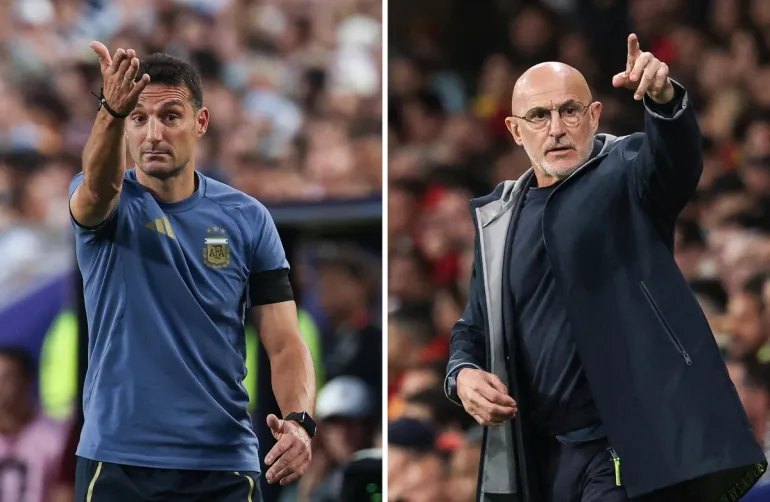
How Spain Reached the World Cup 2026 Final
Spain’s knockout run has been a masterclass in control: 3-0 over Austria in the Round of 32, a stoppage-time Merino winner past Portugal in the Round of 16, another late Merino goal to beat Belgium 2-1 in the quarterfinals, and a 2-0 win over France in the semifinal. Six knockout games, all won — three of them clean sheets.
Against France, Mikel Oyarzabal converted a 22nd-minute penalty (won by Lamine Yamal) and Pedro Porro sealed it on 58 minutes, with Spain limiting the tournament’s most dangerous attack to just 0.3 xG. It was Spain’s second major-tournament win over France since Euro 2024.
The Best Defense in the Tournament: 649 Minutes Without Conceding
Before Belgium’s De Ketelaere headed one in during the quarterfinal, Spain had gone 649 minutes without conceding — the longest clean-sheet streak in World Cup history. They have conceded just one goal in six matches, the best defensive record of the tournament, and shut France out again in the semifinal.
Spain’s Unusual Route to the Final
Here’s the paradox: the most convincing team in the tournament keeps winning in unconvincing ways. Spain’s goals have increasingly come from penalties, set pieces and substitutes — Merino became the first player in World Cup history to score decisive goals off the bench in consecutive knockout rounds. Their open-play efficiency is not elite, and if the final brings a well-drilled defensive opponent, breaking them down could be Spain’s biggest test.
Full squad breakdown: France vs Spain 0-2 — full match report.
How Argentina Reached the World Cup 2026 Final
In the early hours of July 16, Argentina staged a thrilling 2-1 comeback victory over England in the semifinals to book their ticket to the 2026 World Cup final, where they will face Spain on July 19. Trailing until the 84th minute, the Albiceleste turned the tide in just the final few minutes, thanks to a combination of manager Lionel Scaloni’s tactics and the sheer class of Lionel Messi.
Match Highlights: England Lead, Argentina Fight Back
Anthony Gordon opened the scoring for England in the 55th minute after a buildup play that exploited the space behind Nicolas Tagliafico. Armed with the lead, manager Thomas Tuchel opted to sit deep to protect the scoreline rather than continuing to press forward—a decision that ultimately cost the Three Lions.
Argentina piled on relentless pressure in the latter half of the match. Enzo Fernandez leveled the score at 1-1 with a long-range strike in the 85th minute, before Lautaro Martinez headed home the winner in the 90+2 minute from a Messi cross to seal the 2-1 victory.
Messi Breaks England’s Defense Without Even Touching the Ball
Enzo’s equalizer was not just a moment of individual brilliance. When Messi received the ball on the right wing facing a packed defense, midfielder Elliot Anderson was forced to leave “Zone 14” to help close him down, leaving the space in front of the box wide open. Enzo immediately exploited this gap and fired past Jordan Pickford. Messi’s mere presence was enough to force England to alter their defensive shape.
Scaloni’s Masterclass: 5 Substitutions, 5 Perfect Moves
Trailing by a goal, Scaloni subbed on Nicolas Gonzalez for Leandro Paredes in the 63rd minute—a bold decision that stretched England’s backline and freed up space for Messi. According to Opta statistics, after Gordon’s opening goal, Argentina commanded an astonishing 88% of possession for the remainder of the match. Scaloni subsequently introduced Rodrigo De Paul, Lautaro Martinez, Nicolas Otamendi, and Gonzalo Montiel to sustain the pressing intensity, and it was this group of substitutes that directly contributed to the winning goal.
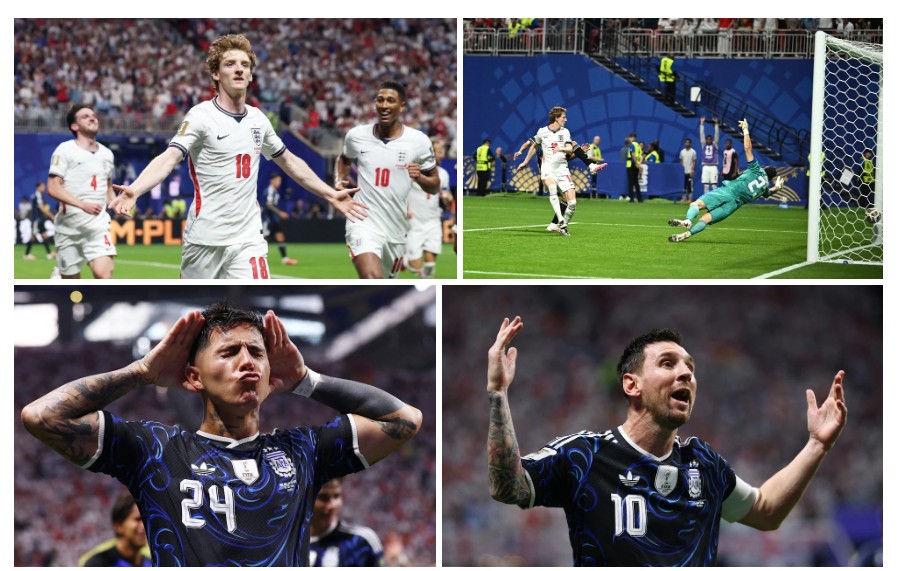
Messi’s Rare Right-Footed Assist
The defining detail of the winning goal: Messi is world-renowned for his magical left foot, but his assist to Lautaro came from a right-footed cross. England had meticulously prepared to lock down Messi’s left foot throughout the match, but he chose to finish them off with his less talked-about weapon. This is not the first time Messi’s right foot has made a difference in this tournament; he previously scored with his right against Algeria, and came close to doing the same against Switzerland, Egypt, and Cape Verde.
Looking Ahead: With this victory, Argentina advances to the 2026 World Cup final to face Spain on July 19. This is a historic opportunity for Scaloni’s men to become the first team since Brazil in 1962 to successfully defend their World Cup title.
Opta’s Pre-Match Title Projection (Archived): Spain’s Case
Update (July 18): Opta’s latest model now puts Spain’s title probability at 59.46% before the final, with Argentina at 40.54%.
Spain’s case rests on four pillars:
- Midfield control: Rodri, Pedri and Fabián Ruiz drive the tournament’s leading possession game.
- Defensive organization: France held to 0.3 xG in the semifinal; one goal conceded all tournament.
- Bench depth: Merino has scored off the bench in three straight rounds — De la Fuente holds the strongest “game-changer” options in the tournament.
- Yamal’s spark: the 18-year-old keeps creating danger — he won the semifinal penalty that broke the deadlock.
The result confirmed the pre-match analysis: Spain lifted the trophy again, 16 years after their last triumph.
Head-to-Head: Spain vs Argentina
Across all competitions, the two sides have met 16 times: Spain have won 6, Argentina have won 6, and 2 matches were drawn. Their last five meetings, all friendlies, read: Spain 6-1 (2018), Argentina 4-1 (2010), Spain 2-1 (2009), Spain 2-1 (2006), Argentina 2-0 (1999).
This will only be the second time the two nations meet at a World Cup — the first was the 1966 group stage in England, where Argentina won 2-1 (Spain were eliminated in the group phase that year, Argentina in the quarterfinals).
On silverware: Spain have won the World Cup once (2010) and hold the record for European Championship titles (4: 1964, 2008, 2012, 2024). Argentina have won the World Cup three times (1978, 1986, 2022) and hold the record for Copa América titles (16), most recently in 2024. This is also the first time in 60 years that a World Cup final has featured the reigning European and South American champions — a win for Argentina would be South America’s 11th World Cup title, just one behind Europe’s tally.
What the Coaches and Players Are Saying
- Luis de la Fuente (Spain head coach): believes both sides will let talent and quality football decide the final, rather than anything else.
- Rodri (Spain captain): says this generation has already made its mark by reaching a World Cup final, but their ambitions go further still.
- Lionel Scaloni (Argentina head coach): calls Messi the greatest player in football history and says it fills him with pride to see him reach a final at 39.
- Emiliano Martínez (Argentina goalkeeper): says he sometimes gets emotional thinking about what the team has achieved, and has urged his teammates to simply enjoy the moment.
How to Watch the World Cup 2026 Final
- Result: Spain 1-0 Argentina (after extra time)
- Goal: Ferran Torres, 106′
- Replay: full-match replays and highlights are available now on Fox Sports and Telemundo’s platforms
World Cup 2026 winners to receive historic first championship rings
- On Sunday, 19 July, the FIFA World Cup 2026 champions will be crowned at New York New Jersey Stadium. In addition to the iconic trophy and prestigious gold medals, a new symbol of triumph will be awarded to the winning team.
- In a momentous first for a FIFA competition, the tournament winners will also receive bespoke championship rings, bringing one of the most recognisable American sporting traditions to the global game.
- Each ring will be part of a strictly limited edition of just 2,026 individually numbered pieces, a direct tribute to the tournament itself. Of these, 30 will be presented to the victorious team, while 1,996 will be made available to fans worldwide as an Official Licensed Product, allowing supporters to own a unique piece of FIFA World Cup 2026 history.
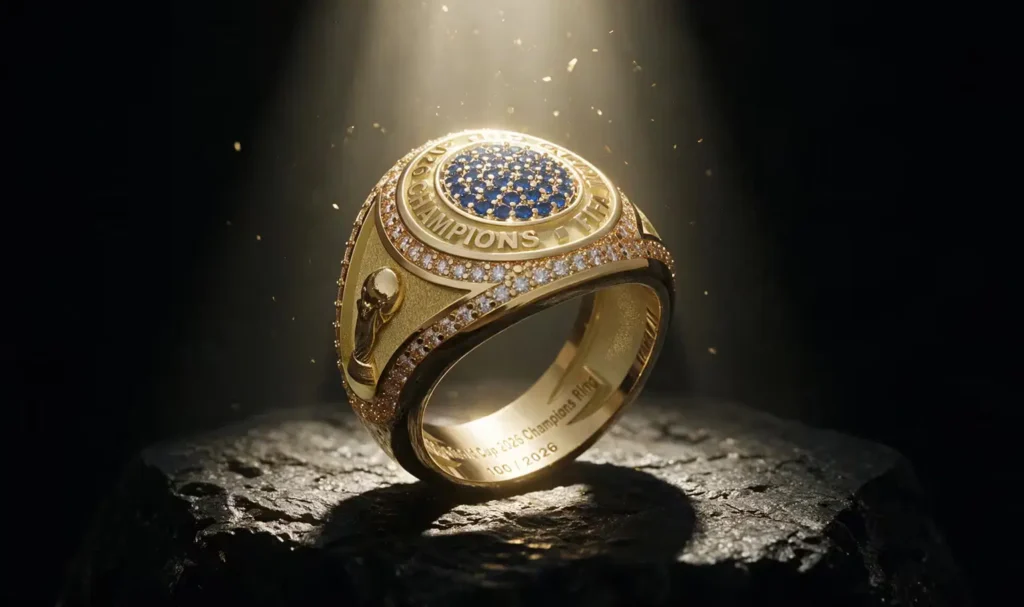
- One side of the ring proudly features the FIFA World Cup trophy, while the other will be customised to reflect the identity of the winning team. Each ring will be individually numbered, custom-fitted and delivered with its own certificate of authenticity.
- Immediately after the final, the captain and head coach of the winning team will receive temporary rings to commemorate the occasion. Each of the 30 rings for the winners will then be customised before being officially presented at a later date, ensuring the perfect lifelong fit for an achievement that will echo through eternity.
FAQ
- What was the final score of the World Cup 2026 final? Spain won 1-0 after extra time, with Ferran Torres scoring the only goal in the 106th minute.
- Who scored the winning goal? Ferran Torres, going one-on-one with goalkeeper Emiliano Martínez after Argentina’s Enzo Fernández was sent off.
- How many World Cup titles has Spain now won? Two — 2010 and 2026.
- Where can I watch the replay? Fox Sports (English) and Telemundo (Spanish).
Related reading: