
You started strong — new shoes, a fresh playlist, a burst of enthusiasm. Then life happened. Sound familiar? Learning how to stay motivated to exercise is one of the most common challenges people face, and science now offers clear, actionable answers.
Why Exercise Motivation Fades — and What the Research Says
According to the Centers for Disease Control and Prevention (CDC), only 53% of U.S. adults meet the recommended guidelines for aerobic activity. The gap between intention and action is enormous — and it’s not a matter of willpower.
A 2021 review published in British Journal of Sports Medicine identified three primary drivers of exercise dropout: unrealistic expectations, lack of intrinsic motivation, and poor habit formation. Understanding these roots is the first step toward lasting change.
- 80% of gym members quit within 5 months of joining
- 66 average days to form an automatic habit
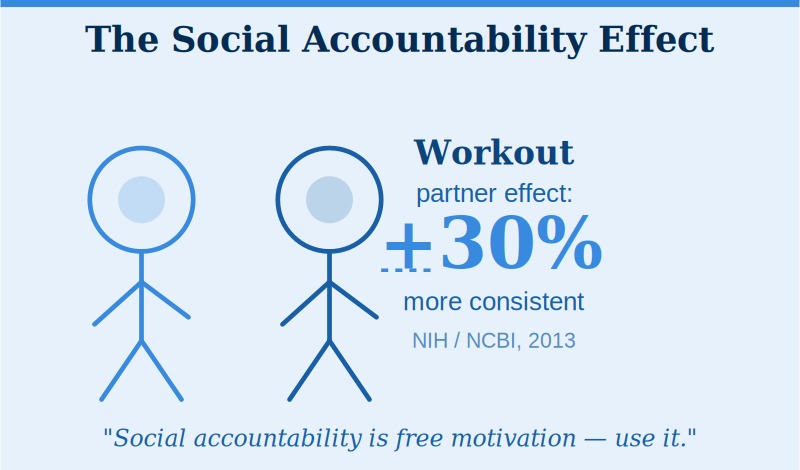
- 30% more consistent when exercising with a partner
Key insight: Motivation is not a fixed trait — it is a skill. Research from Self-Determination Theory (SDT) shows that motivation grows when your exercise feels autonomous, competent, and connected to others.
Set the Right Goals to Stay Motivated to Exercise
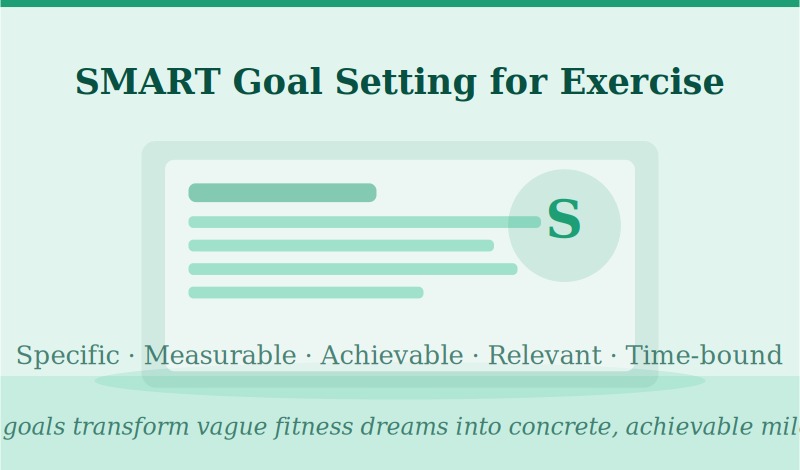
Vague goals like “get fit” are motivation killers. The SMART goal framework — Specific, Measurable, Achievable, Relevant, Time-bound — is backed by decades of behavioral research.
Process Goals vs. Outcome Goals
While outcome goals (“lose 10 lbs by July”) feel motivating, research published in the Journal of Sport and Exercise Psychology shows that process goals (“walk 30 minutes every Monday, Wednesday, and Friday”) are far more effective at maintaining long-term motivation.
- Write down one specific, process-focused goal this week — not “exercise more,” but “run 20 minutes on Tuesday and Thursday.”
- Break big goals into monthly milestones. Celebrate each one explicitly.
- Review and adjust goals every 4 weeks. Stagnant goals become invisible goals.
- Tell at least one other person your goal — public commitment increases follow-through by up to 65% according to research by Dr. Gail Matthews at Dominican University.
Build an Exercise Habit That Sticks
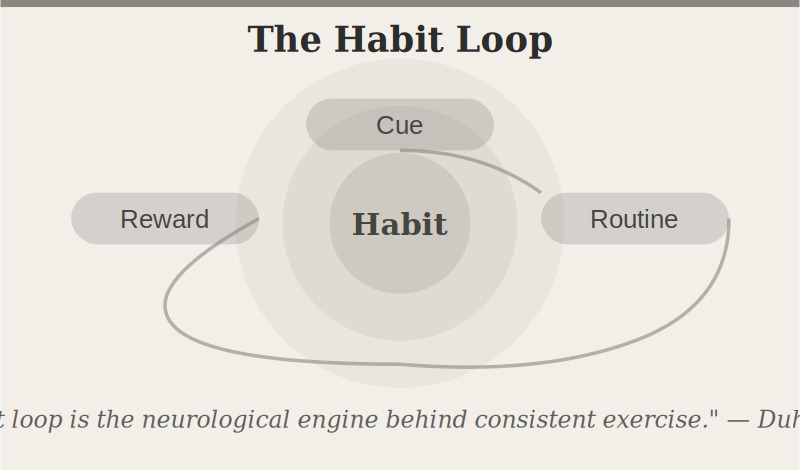
The most reliable way to stay motivated to exercise long-term is to make it automatic — a habit rather than a decision. According to habit researcher Charles Duhigg, habits form through a three-part loop: Cue → Routine → Reward.
Habit Stacking for Exercise
Habit stacking — a concept popularized by James Clear in Atomic Habits — means attaching a new exercise behavior to an existing habit. For example: “After I pour my morning coffee, I will put on my running shoes.”
Practical Example: Lay out your workout clothes the night before. This tiny “environmental design” trick reduces the friction of starting, which BJ Fogg’s Behavior Model identifies as one of the most powerful levers of behavior change.
The Psychology Behind Staying Motivated to Exercise
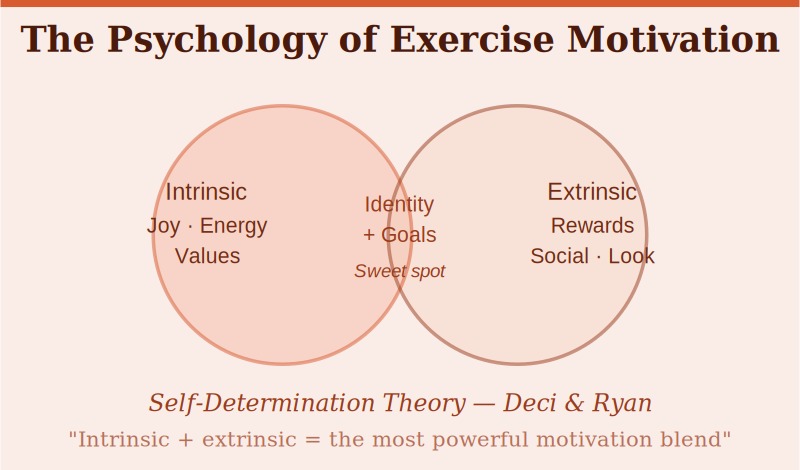
Two types of motivation drive exercise behavior, according to Self-Determination Theory:
Intrinsic Motivation
Exercising because it feels good, is enjoyable, or aligns with your values. Most durable form of motivation.
Extrinsic Motivation
Exercising for external rewards like appearance, praise, or prizes. Useful to get started, but fades without intrinsic support.
Identified Regulation
Exercising because it aligns with a personally valued goal (health for family, energy for work). Bridge between extrinsic and intrinsic.
Integrated Motivation
Exercise becomes part of your identity — “I am someone who moves every day.” The gold standard for lasting motivation.
A meta-analysis of 66 studies in Health Psychology found that interventions targeting intrinsic motivation produced significantly better long-term adherence than reward-based programs alone.
“The people who are most consistent with exercise don’t rely on motivation — they’ve built a system that removes the need for it.”
10 Proven Strategies to Stay Motivated to Exercise
1. Find Your “Why”
Research from the NIH shows that people who connect exercise to a deep personal value — not aesthetics, but energy, mental health, longevity, or being present for family — are significantly more consistent. Write your “why” somewhere visible.
2. Choose Activities You Actually Enjoy
The best workout is one you’ll actually do. A study in Medicine & Science in Sports & Exercise found that enjoyment is the single strongest predictor of long-term exercise participation. Hate running? Try cycling, dancing, or martial arts.
3. Schedule Exercise Like a Meeting
According to a study in the Annals of Behavioral Medicine, implementation intentions — concrete plans specifying when, where, and how you will exercise — double the likelihood of following through.
4. Use the “Two-Minute Rule”
From James Clear’s Atomic Habits: when motivation is low, commit to just two minutes. Starting is the hardest part. Most people who put on their shoes end up completing a full workout.
5. Exercise with Others
Social accountability is one of the most powerful motivational tools available. Research published in the Journal of Social Sciences found that exercising with a partner increases both consistency and performance. Group fitness classes, running clubs, or simply texting a friend your workout all count.
6. Track Your Progress Visually
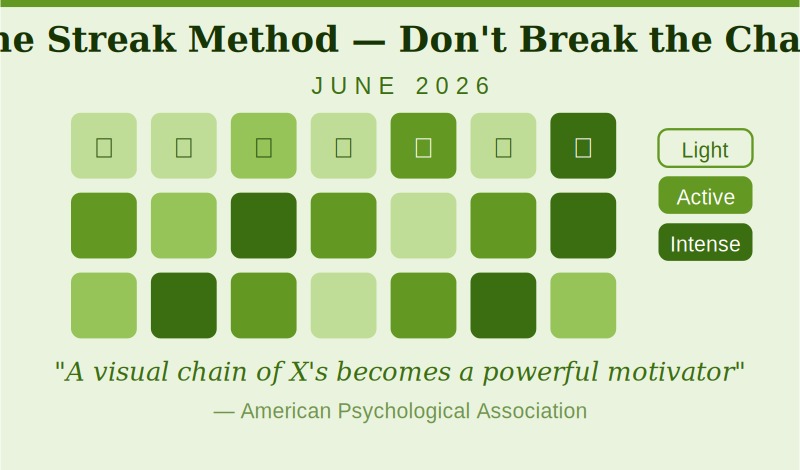
Tracking creates a “streak” effect. The American Psychological Association reports that visual feedback on progress significantly boosts self-efficacy — your belief in your ability to succeed — which is the #1 predictor of sustained behavior change.
7. Reward Yourself Strategically
Non-food rewards tied to milestones create positive reinforcement loops. The key is choosing rewards that feel genuinely meaningful — new gear, a massage, a favorite activity. Avoid rewards that undermine your goals.
8. Create an Energizing Environment
Your environment shapes behavior more than willpower. Behavioral design research shows that people who keep gym bags by the door, have a dedicated workout space at home, or live near parks exercise significantly more than those without those environmental cues.
9. Use Music and Podcasts Strategically
A meta-analysis in Psychology of Sport and Exercise found that music increases endurance by up to 15% and improves perceived effort. Reserve your favorite podcast or playlist exclusively for workouts — this creates a powerful associative cue.
10. Embrace “Good Enough” Workouts
Perfectionism is motivation’s enemy. Research on self-compassion shows that people who forgive themselves after a missed workout are more likely to resume exercise quickly than those who engage in self-criticism. A 15-minute walk beats zero minutes every single time.
How to Track Progress to Stay Motivated
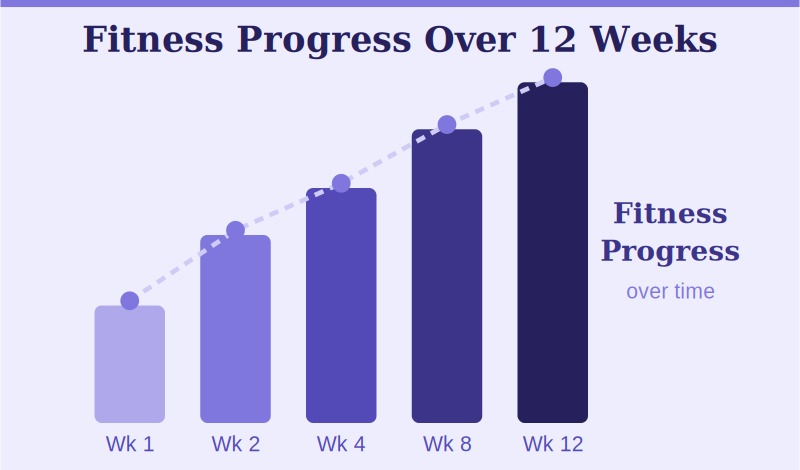
Tracking done right is a motivation multiplier. The Mayo Clinic recommends keeping an exercise journal noting duration, intensity, and how you felt — not just what you did.
Wearable Devices
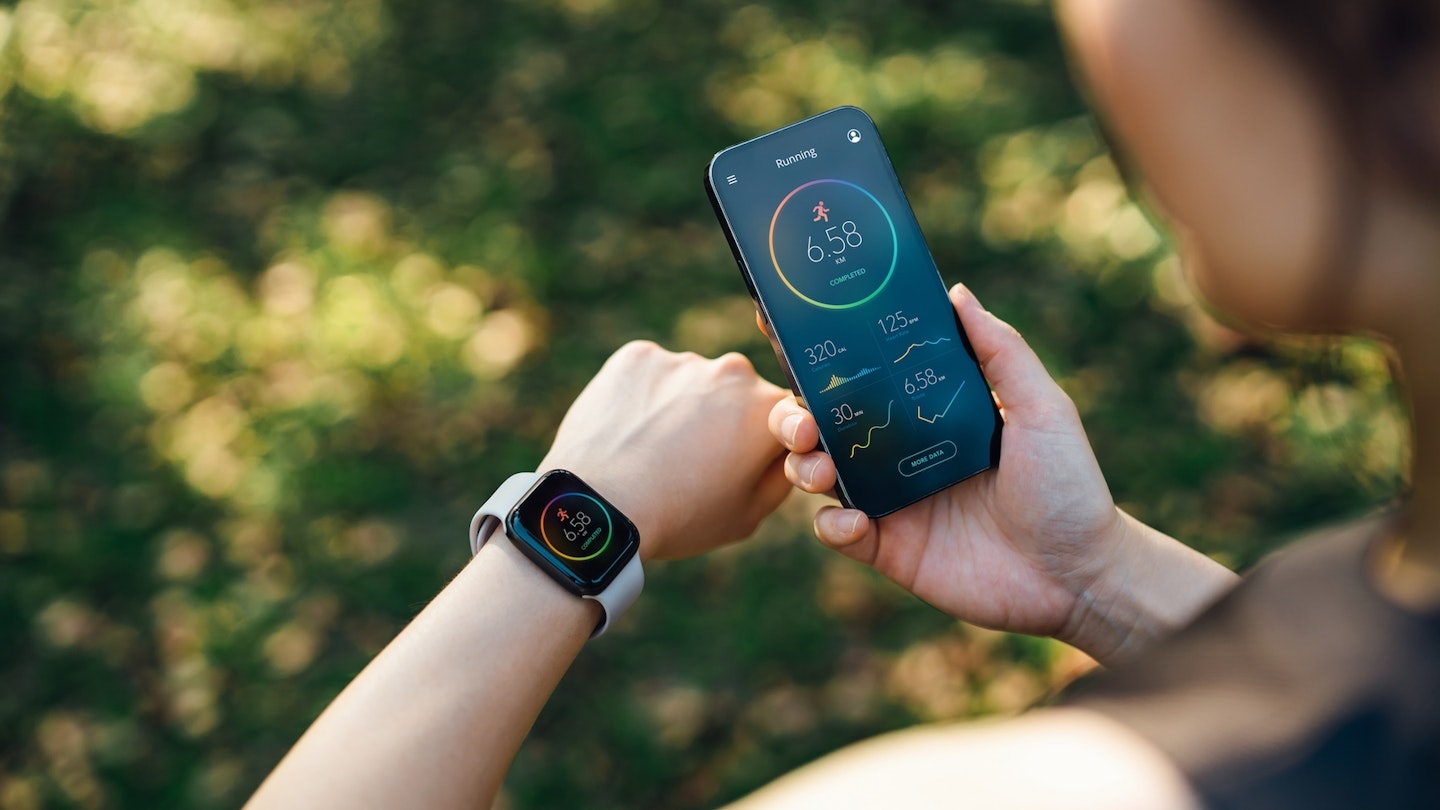
Apps like Garmin Connect or Apple Watch track steps, heart rate zones, and recovery, giving concrete feedback loops.
Exercise Journal
A simple notebook where you log workouts creates tangible evidence of progress and strengthens identity as an active person.
Milestone Calendar
Mark each completed workout on a calendar. The visual chain of X’s becomes a powerful motivator — you won’t want to break the streak.
How to Overcome Motivation Slumps
Every exerciser — including elite athletes — goes through motivational valleys. According to the American Psychological Association, slumps are normal and expected. The goal is not to avoid them but to have a recovery plan.
- Reduce, don’t quit. Cut your workout to 10 minutes instead of stopping entirely. Maintaining the habit, even at reduced intensity, prevents the “all-or-nothing” trap.
- Change your routine. Novelty restores motivation. Try a new class, trail, or sport. The NIH notes that variety prevents habituation and reignites intrinsic interest.
- Reconnect with your “why.”Re-read your original motivation. Look at progress photos or journal entries from when you started.
- Seek professional guidance. A certified personal trainer (ACSM) can reframe your program with fresh eyes and accountability.
- Address rest and recovery. Sometimes a slump is your body asking for rest. The Sleep Foundation links sleep deprivation directly to decreased exercise motivation and performance.
Frequently Asked Questions
How long does it take to stay motivated to exercise consistently?
Research from University College London found that habit formation takes an average of 66 days, though the range is 18–254 days depending on the person and behavior. The key is consistency during the early weeks, when motivation is most fragile.
What do you do when you have no motivation to exercise?
Use the “five-minute rule” — commit to just five minutes of movement. Research consistently shows that getting started is the biggest barrier. Once in motion, most people continue. Also check whether low motivation signals overtraining, poor sleep, or stress — sometimes rest is the right answer.
Does listening to music help stay motivated to exercise?
Yes. A review in Frontiers in Psychology confirmed that music improves endurance, reduces perceived effort, and elevates mood during exercise — all of which support longer-term motivation.
Is morning or evening exercise better for motivation?
The best time is the time you’ll actually do it. A 2021 study in Frontiers in Physiology found that morning exercisers are often more consistent due to fewer competing demands, but individual chronotype (your natural body clock) matters most.
How do I stay motivated to exercise when I don’t see results?
Shift your metrics. Visible physical changes can take 8–12 weeks, but improvements in energy, sleep quality, mood, and strength begin within 2–4 weeks according to WHO guidelines on physical activity. Track these non-scale victories to sustain motivation during the early phase.
The Bottom Line
Staying motivated to exercise is not about being the kind of person who loves hard workouts. It’s about designing your environment, goals, and identity so that movement becomes the path of least resistance.
Start small, stay consistent, connect your workouts to values that matter deeply to you, and use social accountability to bridge the motivation gaps. Over time, exercise stops being something you push yourself to do — and becomes something you simply are.