
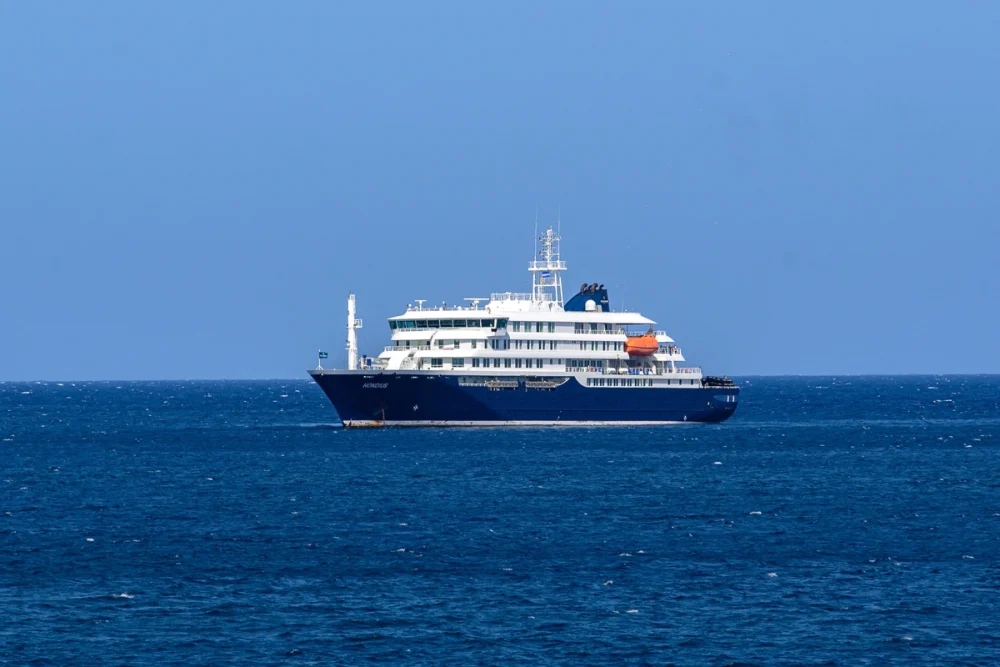
A rare and deadly outbreak of hantavirus aboard the MV Hondius, a polar expedition cruise ship sailing through the Atlantic Ocean, has killed three passengers and left at least three others seriously ill, the World Health Organization (WHO) confirmed on Sunday. The incident has triggered a wave of searches worldwide and intense discussion in international news communities, drawing attention to a virus that most people associate with rural rodent exposure — not ocean voyages.
The Outbreak: What Happened on the MV Hondius
The MV Hondius, a Dutch-flagged polar cruise ship operated by the Netherlands-based company Oceanwide Expeditions, departed from Ushuaia, Argentina, approximately three weeks before the outbreak was reported. The vessel, which can accommodate around 150 passengers alongside roughly 70 crew members, had been traveling a remote itinerary that included stops in Antarctica, the Falkland Islands, and the island of St. Helena in the South Atlantic, before heading toward Spain’s Canary Islands via Cape Verde.
The first passenger to fall ill was a 70-year-old man who developed symptoms including fever, headache, and abdominal pain. He later died after the ship reached St. Helena, a British Overseas Territory. His 69-year-old wife also became sick and was evacuated to South Africa, where she collapsed at Johannesburg’s OR Tambo International Airport and died at a health facility. A third passenger, a British national, was hospitalized in South Africa and tested positive for hantavirus — representing the single laboratory-confirmed case in the outbreak so far. He was receiving care in intensive care. Three additional passengers showed symptoms consistent with hantavirus infection and were classified as suspected cases pending further testing.
As of Sunday, the MV Hondius was docked off the port of Praia, the capital of Cape Verde, an island nation off the west coast of Africa. Cape Verde authorities had not authorized symptomatic passengers to disembark. The WHO said it was coordinating a medical evacuation effort for the two remaining symptomatic passengers still aboard the vessel, while South Africa’s National Institute for Communicable Diseases launched contact tracing in the Johannesburg area to identify anyone who may have been exposed to infected individuals upon arrival.
Oceanwide Expeditions confirmed it was “managing a serious medical situation” and that Dutch authorities were working to repatriate two ill passengers as well as the body of a deceased passenger.
What Is Hantavirus?
Hantavirus is a family of viruses carried primarily by rodents such as rats, mice, and voles. In their animal hosts, the viruses cause no apparent illness, but when transmitted to humans they can trigger serious and potentially fatal disease. There are two main disease syndromes associated with hantavirus infection in humans.
Hantavirus Pulmonary Syndrome (HPS) is the form found mainly in the Americas, caused by so-called New World hantaviruses. The disease attacks the lungs: the virus invades the tiny blood vessels (capillaries) in lung tissue, causing them to leak fluid into the air sacs. This can lead to rapid-onset respiratory failure and, if untreated, death. HPS carries a case fatality rate of roughly 30 to 60 percent. In the United States, the most common cause of HPS is the Sin Nombre virus, carried by the deer mouse, and the CDC recorded 864 reported cases between 1993 and 2022 — underlining just how rare but serious this disease is.
Hemorrhagic Fever with Renal Syndrome (HFRS) is the predominant form in Europe, Asia, and Africa, caused by Old World hantaviruses. It primarily affects the kidneys. Depending on the specific strain involved, mortality ranges from less than 1 percent to around 15 percent.
How Does It Spread?
The primary route of transmission is inhalation. When rodent urine, feces, or saliva dry out and are disturbed — for example, when sweeping a contaminated area, opening an unused building, or handling nesting materials — infectious particles become airborne and can be breathed in. The virus can survive in the environment for days to weeks depending on temperature and humidity, which extends the window of exposure risk.
Direct contact with contaminated materials and, in rare cases, rodent bites can also transmit the virus. Person-to-person transmission is extremely rare and has only been well documented with the Andes virus, a strain found in South America — a detail that the WHO specifically flagged in its statement on the MV Hondius outbreak, noting that while rare, hantavirus “may spread between people.” Investigators have not yet determined whether any human-to-human transmission occurred aboard the ship.
Symptoms and Treatment
Early symptoms typically appear one to eight weeks after exposure and closely resemble influenza: fever, fatigue, muscle aches (especially in the hips, thighs, back, and shoulders), headache, nausea, vomiting, and dizziness. This overlap with common viral illnesses makes early diagnosis difficult.
In HPS, a second, more dangerous phase follows: fluid accumulates in the lungs, causing shortness of breath, chest tightness, coughing, and potentially life-threatening respiratory distress. In HFRS, kidney failure is the defining later complication.
There is no specific antiviral treatment or approved vaccine for hantavirus infection. Medical care is supportive — focused on maintaining breathing and organ function — and may involve mechanical ventilation or extracorporeal membrane oxygenation (ECMO) in severe cases. Early hospitalization significantly improves survival chances.
Why a Cruise Ship?
The appearance of hantavirus aboard an ocean vessel is striking and unusual. Cruise ships are not typical environments for this type of infection. The MV Hondius visited several remote locations, including areas of the South Atlantic and Antarctica, where rodent exposure during onshore excursions is plausible. Health investigators are working to determine where and how passengers were exposed, including whether contact with infected rodents occurred at one of the ship’s remote port stops. The investigation includes genomic sequencing of the virus to identify its precise strain and origin.
Recent Context: Gene Hackman Connection
Public awareness of hantavirus had already been elevated before this outbreak. In February 2025, Betsy Arakawa, the wife of Hollywood actor Gene Hackman, died of hantavirus pulmonary syndrome. Hackman, aged 95 and in poor health, died approximately a week later from heart disease and Alzheimer’s disease at the couple’s home in New Mexico. Their deaths drew significant international attention to a disease that many people had never previously heard of.
Global Search Interest
Data tracked by Kiolix Pulse shows that this outbreak has generated substantial search interest across multiple countries. The United States led with over 200,000 searches, followed by the United Kingdom with over 100,000. France saw more than 52,000 searches, Germany over 45,000, and Canada over 40,000. Brazil recorded over 25,000 searches, with Spain, Australia, and Italy each registering tens of thousands more. Smaller but notable volumes were recorded in Mexico, India, Pakistan, and Indonesia.
On Reddit, a single post titled “Three dead in suspected hantavirus outbreak on Atlantic cruise ship” in the r/worldnews community accumulated a combined score of over 18,000 upvotes, placing it among the most-discussed international news stories at the time of publication and reflecting the widespread concern and curiosity the incident sparked among English-speaking readers globally.
The international spread of search interest reflects the global passenger makeup of expedition cruise ships, the WHO’s involvement, and the intrinsic public concern that arises whenever a rare but deadly pathogen appears in an unexpected setting.
What Health Authorities Are Saying
The WHO emphasized that it is supporting a “full public health risk assessment” in coordination with national authorities and Oceanwide Expeditions. Virus sequencing is underway to identify the specific strain involved. South Africa’s National Institute for Communicable Diseases is conducting contact tracing. The WHO’s statement acknowledged that while person-to-person spread of hantavirus is rare, it cannot be excluded and warrants careful monitoring.
Public health officials have stressed that the risk to the general traveling public remains low. Hantavirus is not transmitted through food or water in the way that norovirus or cholera are, and it does not spread through casual contact in the way that respiratory viruses like influenza do. The circumstances aboard the MV Hondius appear to involve direct or indirect exposure to infected rodents, most likely during shore excursions at remote stops along the voyage.
How to Reduce Your Risk
For travelers and the general public, the CDC and WHO recommend the following precautions to minimize the risk of hantavirus exposure:
- Avoid contact with wild rodents and their droppings, urine, or nesting materials.
- Before cleaning any space that has been closed and potentially infested with rodents, ventilate the area for at least 30 minutes and use gloves and a well-fitted mask.
- Seal gaps and holes in buildings to prevent rodents from entering.
- Store food in rodent-proof containers.
- If you develop flu-like symptoms — particularly fever, muscle aches, and difficulty breathing — after any potential rodent exposure, seek medical attention promptly and inform your doctor of the exposure history.
Sources
- NBC News — Suspected hantavirus infections on Atlantic cruise ship: https://www.nbcnews.com/health/health-news/3-dead-suspected-hantavirus-infections-cruise-ship-rcna343366
- PBS NewsHour — Three dead in suspected hantavirus outbreak aboard Atlantic cruise ship: https://www.pbs.org/newshour/world/three-dead-in-suspected-hantavirus-outbreak-aboard-cruise-ship-in-the-atlantic-ocean-who-says
- RTE News — Three die from suspected virus outbreak on cruise ship: https://www.rte.ie/news/world/2026/0503/1571589-hantavirus-cruise-ship/
- CBC News — Suspected hantavirus outbreak on cruise ship kills 3: https://www.cbc.ca/news/world/suspected-hantavirus-outbreak-cruise-ship-9.7186154
- SBS News — What is hantavirus, the suspected disease behind a deadly cruise ship outbreak: https://www.sbs.com.au/news/article/what-is-hantavirus-cruise-ship-outbreak/jh25h768v
- CDC — About Hantavirus: https://www.cdc.gov/hantavirus/about/index.html
- Mayo Clinic — Hantavirus Pulmonary Syndrome: https://www.mayoclinic.org/diseases-conditions/hantavirus-pulmonary-syndrome/symptoms-causes/syc-20351838
- Cleveland Clinic — What Is Hantavirus Pulmonary Syndrome: https://my.clevelandclinic.org/health/diseases/17897-hantavirus-pulmonary-syndrome