
Last Updated on 13/07/2026 by TinHN Editor
Updated July 13, 2026 — Quarterfinals complete, the final four are set
Four teams remain. All four of them have lifted the trophy before:
- 🇫🇷 France 2–0 Morocco — Mbappé scored and set up Dembélé; France have not conceded a single goal across three knockout matches
- 🇪🇸 Spain 2–1 Belgium — Mikel Merino struck in the 88th minute, one round after his 90th-minute winner against Portugal
- 🏴 England 2–1 Norway (AET) — a Jude Bellingham brace saw off Erling Haaland’s Norway in extra time
- 🇦🇷 Argentina 3–1 Switzerland (AET) — the holders were level after 90 minutes for the third knockout game running, then pulled clear against ten men
That leaves two heavyweight semifinals: France vs Spain in Arlington on Tuesday, July 14, and England vs Argentina in Atlanta on Wednesday, July 15. The outright market has never been tighter this deep into a World Cup — France remain the favourite, but Spain, England and Argentina are separated by almost nothing.
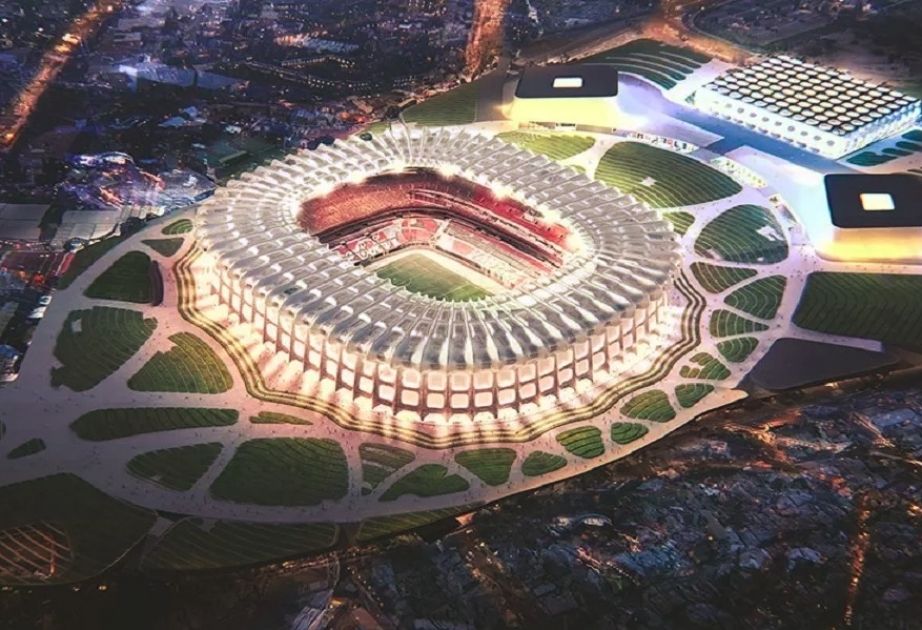
The 2026 FIFA World Cup kicked off on June 11 at the Azteca Stadium in Mexico City and concludes on July 19 at MetLife Stadium in New Jersey. Forty-eight nations. One hundred and four matches. One trophy.
Check the full Round of 32 schedule here.
Who Will Win World Cup 2026?
Odds below are sourced from FanDuel as of July 12, 2026, with the semifinal line-up confirmed. Markets are live and move constantly — check current prices before betting.
| Team | Outright Odds | Semifinal |
|---|---|---|
| 🇫🇷 France | +140 | vs Spain — Tue, Jul 14, Arlington |
| 🏴 England | +310 | vs Argentina — Wed, Jul 15, Atlanta |
| 🇪🇸 Spain | +330 | vs France — Tue, Jul 14, Arlington |
| 🇦🇷 Argentina | +400 | vs England — Wed, Jul 15, Atlanta |
Note: France have shortened from +500 pre-tournament to +140, and are the only side yet to concede in the knockout rounds. England are the biggest movers of the round, cut from 5/1 to 7/2 after beating Norway. The defending champions, Argentina, are the longest price of the four despite winning every knockout tie they’ve played. Because the top two on the board — France and Spain — must meet in the semifinal, the winner of that tie is expected to become the overwhelming favourite for the July 19 final.
The Leading Contenders, Squad by Squad
🇦🇷 Argentina — Defending Champions Who Refuse to Lose
Argentina topped Group J with a flawless record — wins over Algeria, Austria and Jordan — and then made the knockout stage as uncomfortable as humanly possible. Cape Verde twice pulled level before Argentina won 3–2 in extra time. Egypt led 2–0 with barely ten minutes left before Cristian Romero and Lionel Messi levelled inside four minutes and Enzo Fernández won it in the 93rd. Switzerland dragged them to extra time again before Argentina finished 3–1.
Three knockout ties, three near-death experiences, three wins. Messi has eight goals at this tournament, taking him to 21 for his World Cup career — the all-time men’s record, ahead of Miroslav Klose.
The open question: Messi is 39 and this is a potential eight-match run, one more than 2022. Argentina have not played a comfortable knockout game yet, and England in Atlanta is a step up from anything they’ve faced. The counter-argument is simple: finding a way when the game is gone is exactly what champions do.
🇫🇷 France — Six Wins, Six Games, No Goals Conceded Since the Group Stage
France have won all six of their matches and outscored opponents 16–2. They beat Senegal, Iraq and Norway to win Group I, dispatched Sweden 3–0 in the Round of 32, ground out a 1–0 win over a physical Paraguay side in the Round of 16, and then took Morocco apart 2–0 in the quarterfinal — Mbappé had a first-half penalty saved, answered with a superb individual goal after the break, and teed up Ousmane Dembélé for the second.
Kylian Mbappé has eight goals and is favourite for both the Golden Boot and the Golden Ball. Dembélé has five. Michael Olise leads the tournament in assists. France have now reached a third consecutive World Cup semifinal — and their eighth overall.
The open question: almost nothing has gone wrong yet, which is its own kind of untested. Spain are the first side France have met who can genuinely take the ball off them for long stretches, and the French have not had to chase a game since the group stage.
🇪🇸 Spain — The Best Defence in the Tournament, and a Habit of Late Winners
Spain have never hit top gear and have never really been in trouble either. A goalless draw with Cape Verde opened the tournament, then came wins over Saudi Arabia and Uruguay to top Group H, a comfortable 3–0 against Austria, and two knockout ties settled by the same substitute: Mikel Merino struck in the 90th minute to beat Portugal 1–0, then again in the 88th to beat Belgium 2–1.
Spain have scored 11 and conceded one — the meanest defence left in the field. Unai Simón is favourite for the Golden Glove; Lamine Yamal is favourite for Young Player of the Tournament. The slow burn has had a hidden benefit: Rodri and Yamal, both fitness doubts before the tournament, have found rhythm without being overloaded.
This is only Spain’s second World Cup semifinal ever. The last one was 2010 — the year they won it.
The open question: Spain grind out 1–0s and 2–1s. France score four. If La Roja’s midfield can’t strangle the game, they have shown little evidence they can win a shootout of a match.
🏴 England — Five Wins, Matching 1966, and Nobody Wants to Play Them
England topped Group L — the so-called “group of death” — unbeaten, with Harry Kane breaking Gary Lineker’s England World Cup scoring record along the way. Then they started answering the questions that have followed them for a decade.
They went a goal down to DR Congo and won anyway. They went to the Azteca, played roughly 40 minutes with ten men, and beat Mexico 3–2. In Miami they wore Norway down 2–1 in extra time, Jude Bellingham scoring twice. Three knockout wins, and adversity in all three.
Five wins in a single World Cup now matches England’s 1966 record. This is their fourth World Cup semifinal, and their second in three tournaments. The market noticed: England were cut from 5/1 to 7/2 and are now the second favourite outright.
The open question: Thomas Tuchel’s biggest night. England have beaten nobody from the top tier of this tournament yet, and Argentina — for all their scrapes — have made a habit of winning exactly the kind of tight, ugly knockout game England keep finding themselves in.
The Two Semifinals: How They’ll Be Won
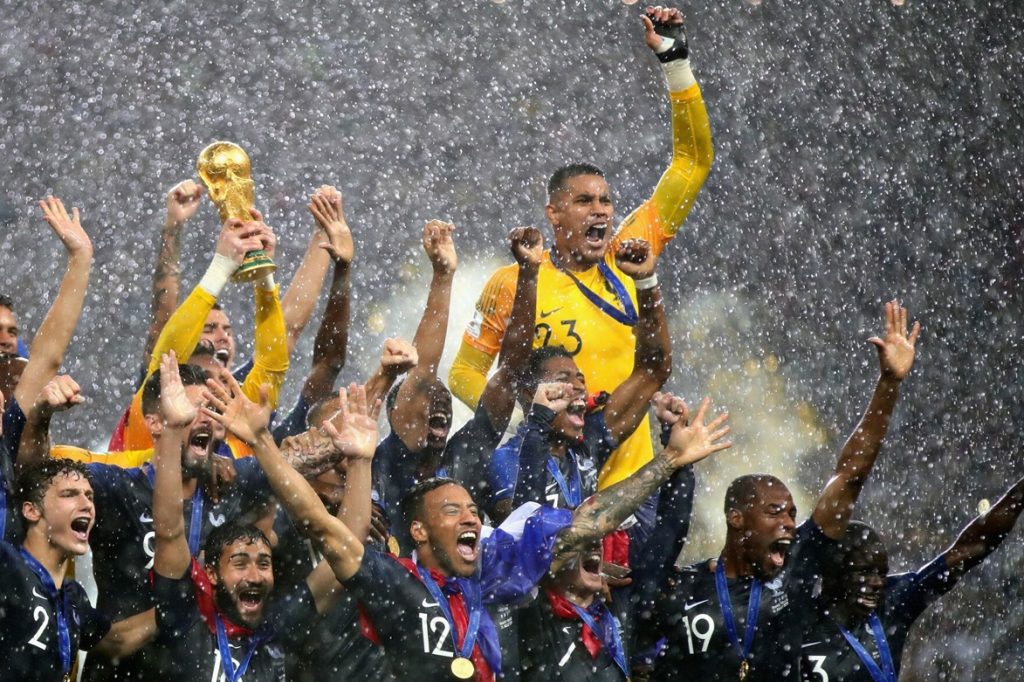
For the first time in World Cup history, all four of FIFA’s top four-ranked teams entering the tournament have reached the semifinals. There are no Cinderellas left.
🇫🇷 France vs 🇪🇸 Spain — Tuesday, July 14, Arlington
Since the 2026 odds first opened back in 2022, only two teams have ever topped the board: these two. They now have to knock each other out one round early.
The tactical question is a clean one. France score in transition — Mbappé, Dembélé and Olise attacking space at speed, 16 goals in six games. Spain refuse to give you space at all — Pedri, Rodri and Fabián Ruiz control possession until the opponent tires, and only one goal has gone past Unai Simón in six matches. Whichever team dictates the rhythm wins.
The warning sign for France: Spain have scored an 88th-minute winner and a 90th-minute winner in consecutive knockout rounds. They do not panic, and they are lethal in the last ten minutes.
The warning sign for Spain: France have not conceded a goal in the knockout stage. Not one. Spain’s late-winner routine requires an opponent who cracks — France haven’t.
The two last met at Euro 2024, where Spain won 2–1 in the semifinal on their way to the title. Expect the winner here to be a heavy favourite for the final.
🏴 England vs 🇦🇷 Argentina — Wednesday, July 15, Atlanta
The tie the neutrals wanted. England and Argentina have not met in a World Cup knockout round since 1998, and the history between them needs no introduction.
England’s case: five wins, the most in a single World Cup since 1966. A team that has come from behind at the Azteca, played 40 minutes a man down and won, and beaten Erling Haaland’s Norway in extra time. Bellingham has arrived. Kane is scoring. The market makes them the slight favourite to advance.
Argentina’s case: three knockout games, three moments where the tournament was slipping away, three wins anyway. Coming back from 2–0 down to Egypt with ten minutes left and winning 3–2 in the 93rd minute is not luck — it is the fourth or fifth time this squad has done exactly that in a major tournament. And Messi, at 39, has eight goals.
The swing factor: legs. Argentina have played 210 minutes of knockout football more than a team taking normal routes, with two extra-time games in five days. England went to extra time against Norway too — but Argentina have done it twice, and their spine is older.
If both favourites hold, the July 19 final at MetLife Stadium is France vs England. If both underdogs land, it’s a rematch of the 2010 final’s winner against the 2022 final’s winner. Nobody would complain about either.
How the 48-Team Format Changes the Calculus
More elite nations survive the group stage — and the cream still rose. With 32 teams advancing instead of 16, the fear was that the extra round would produce chaos. It produced the opposite: for the first time ever, all four of FIFA’s top four-ranked teams reached the semifinals. Cape Verde and Norway had their moments, but the expanded format ultimately gave the best squads more matches to prove they were the best squads.
Attrition is the real story. Argentina have played two extra-time knockout games. England have played one, plus 40 minutes with ten men at altitude in Mexico City. France, by contrast, have not trailed since the group stage and have not conceded in three knockout matches. In an eight-match tournament, that gap in accumulated fatigue may matter more than any tactical detail.
What History Tells Us About World Cup Winners
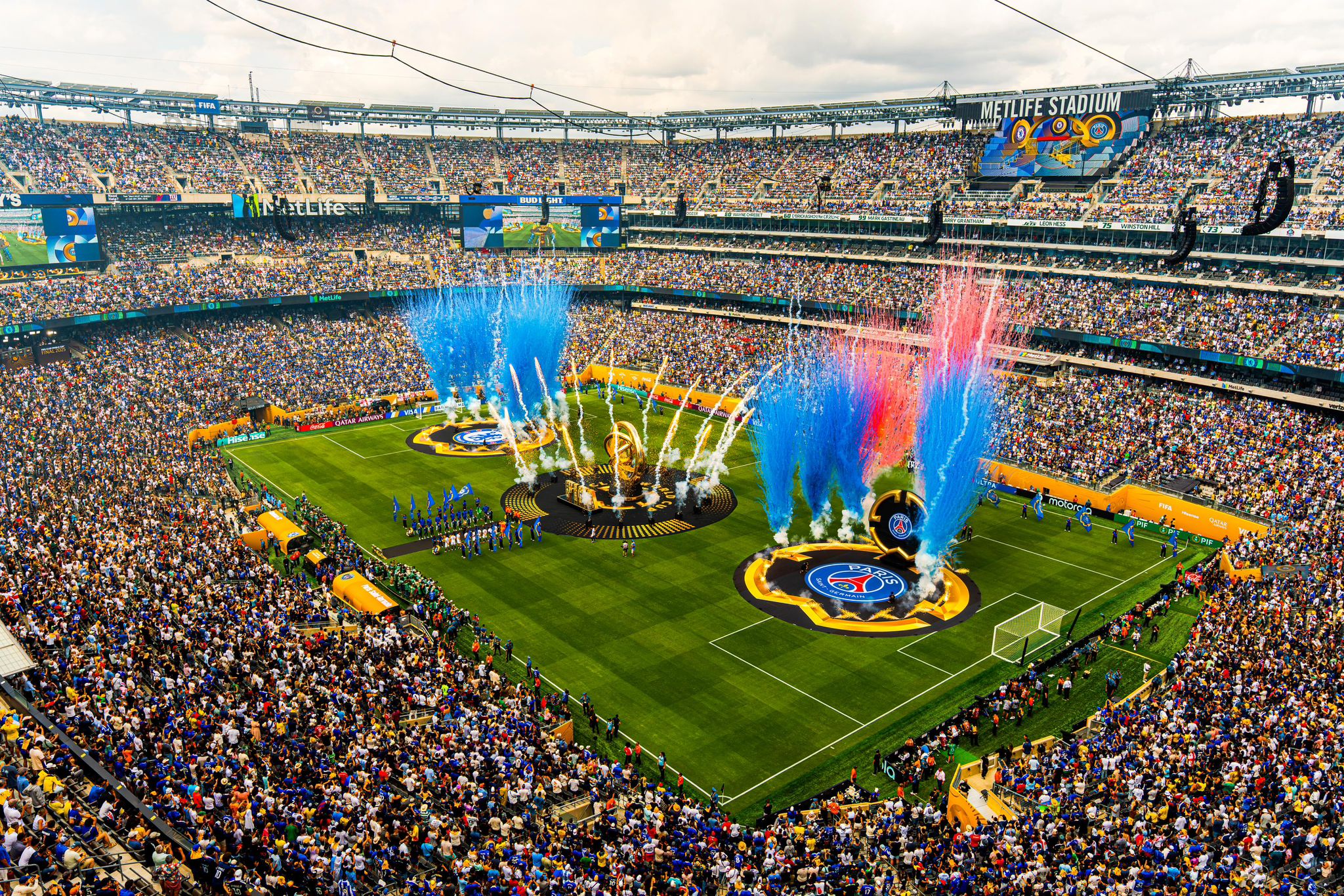
Some patterns hold up across 22 previous tournaments:
- No team has won back-to-back titles since Brazil in 1958–1962. Argentina are now two matches from becoming the second.
- Losing early is no longer disqualifying. Spain lost 0–1 to Switzerland in the 2010 group stage and won the tournament. Argentina lost 1–2 to Saudi Arabia in 2022 and won the tournament. Both times, the eventual champion looked beatable in June.
- Host nations have a strong record — 6 of the 22 previous tournaments were won by a host on home soil. All three 2026 co-hosts (USA, Canada, Mexico) are already out, so that pattern will not repeat this year.
- European teams have won more titles than South American teams (12 to 10). Three of the four semifinalists are European; Argentina carry South America’s hopes alone.
- All four semifinalists are past world champions — France (2), Argentina (3), England (1), Spain (1). Whoever lifts the trophy on July 19 will be extending a tally, not opening one.
Complete World Cup Winners List (1930–2022)
Every champion, every final, every score.
| Year | Winner | Runner-up | Score | Host |
|---|---|---|---|---|
| 1930 | 🇺🇾 Uruguay | 🇦🇷 Argentina | 4–2 | Uruguay |
| 1934 | 🇮🇹 Italy | 🇨🇿 Czechoslovakia | 2–1 (AET) | Italy |
| 1938 | 🇮🇹 Italy | 🇭🇺 Hungary | 4–2 | France |
| 1950 | 🇺🇾 Uruguay | 🇧🇷 Brazil | 2–1 (round robin) | Brazil |
| 1954 | 🇩🇪 West Germany | 🇭🇺 Hungary | 3–2 | Switzerland |
| 1958 | 🇧🇷 Brazil | 🇸🇪 Sweden | 5–2 | Sweden |
| 1962 | 🇧🇷 Brazil | 🇨🇿 Czechoslovakia | 3–1 | Chile |
| 1966 | 🏴 England | 🇩🇪 West Germany | 4–2 (AET) | England |
| 1970 | 🇧🇷 Brazil | 🇮🇹 Italy | 4–1 | Mexico |
| 1974 | 🇩🇪 West Germany | 🇳🇱 Netherlands | 2–1 | West Germany |
| 1978 | 🇦🇷 Argentina | 🇳🇱 Netherlands | 3–1 (AET) | Argentina |
| 1982 | 🇮🇹 Italy | 🇩🇪 West Germany | 3–1 | Spain |
| 1986 | 🇦🇷 Argentina | 🇩🇪 West Germany | 3–2 | Mexico |
| 1990 | 🇩🇪 West Germany | 🇦🇷 Argentina | 1–0 | Italy |
| 1994 | 🇧🇷 Brazil | 🇮🇹 Italy | 0–0 (pens 3–2) | USA |
| 1998 | 🇫🇷 France | 🇧🇷 Brazil | 3–0 | France |
| 2002 | 🇧🇷 Brazil | 🇩🇪 Germany | 2–0 | South Korea/Japan |
| 2006 | 🇮🇹 Italy | 🇫🇷 France | 1–1 (pens 5–3) | Germany |
| 2010 | 🇪🇸 Spain | 🇳🇱 Netherlands | 1–0 (AET) | South Africa |
| 2014 | 🇩🇪 Germany | 🇦🇷 Argentina | 1–0 (AET) | Brazil |
| 2018 | 🇫🇷 France | 🇭🇷 Croatia | 4–2 | Russia |
| 2022 | 🇦🇷 Argentina | 🇫🇷 France | 3–3 (pens 4–2) | Qatar |
Quick records:
- 🏆 Most titles: Brazil — 5 (1958, 1962, 1970, 1994, 2002)
- 🔁 Only back-to-back champions: Italy (1934, 1938) and Brazil (1958, 1962)
- 🌍 European hosts who won at home: Italy (1934), England (1966), West Germany (1974), France (1998)
- 🤯 Greatest final: Argentina 3–3 France (Argentina win 4–2 on penalties), Qatar 2022
- ⚽ Five nations have reached a final without ever winning it: Netherlands (3 finals), Hungary (2), Czechoslovakia (2), Sweden (1), Croatia (1)
- 🎖️ Only eight nations have ever won the World Cup — and four of them are in this year’s semifinals
Frequently Asked Questions
Who are the strongest contenders to win the World Cup 2026?
Four teams remain. France are the outright favourite at around +140, having won all six matches and conceded just twice. England (+310), Spain (+330) and Argentina (+400) are separated by very little. France play Spain on July 14; England play Argentina on July 15.
Who is playing in the World Cup 2026 semifinals?
France vs Spain in Arlington, Texas on Tuesday, July 14, and England vs Argentina in Atlanta on Wednesday, July 15. The winners meet in the final at MetLife Stadium on July 19; the losers contest the third-place playoff on July 18.
Has any team ever won back-to-back World Cups?
Only Brazil, in 1958 and 1962. Argentina, the defending champions, are now two matches away from becoming the second team to do it — starting with England in the semifinal.
When is the World Cup 2026 final?
July 19, 2026, at MetLife Stadium in East Rutherford, New Jersey, kicking off at 3:00 PM ET.
How many matches does the eventual champion have to win?
Eight matches in total: three in the group stage, plus five consecutive knockout wins (Round of 32, Round of 16, quarterfinal, semifinal, final).
Is Messi playing in his last World Cup?
At 39, this is widely expected to be Lionel Messi’s final World Cup. He has eight goals at this tournament, taking him to 21 for his World Cup career — the all-time men’s record, ahead of Miroslav Klose. He has not announced international retirement.
Conclusion
Four teams, three matches, one trophy. France are the favourite and have looked like it, but the gap between the four is the narrowest this deep into a World Cup in living memory — and three of them have already won a knockout tie they were losing. We’ll update this page within hours of each semifinal result, and again once the final line-up at MetLife Stadium on July 19 is confirmed.
Our pick, for now: 🇫🇷 France. Not conceding a goal for three straight knockout rounds is the single most predictive thing any of these four teams has done. But if Spain’s midfield can hold the ball for 70 minutes in Arlington, we reserve the right to change our minds on Wednesday morning.
See more:
- Complete knockout bracket
- World Cup Predictor tool
- All 48 squads and groups
- 48-team format explained
- Where to watch WC 2026
- Golden Boot predictions